How are our sense of freedom and our sense of time connected? What part do our wishes, hopes and will play in it? What happens when we notice that we are not acting alone – and how, and why, do we join a collective process?
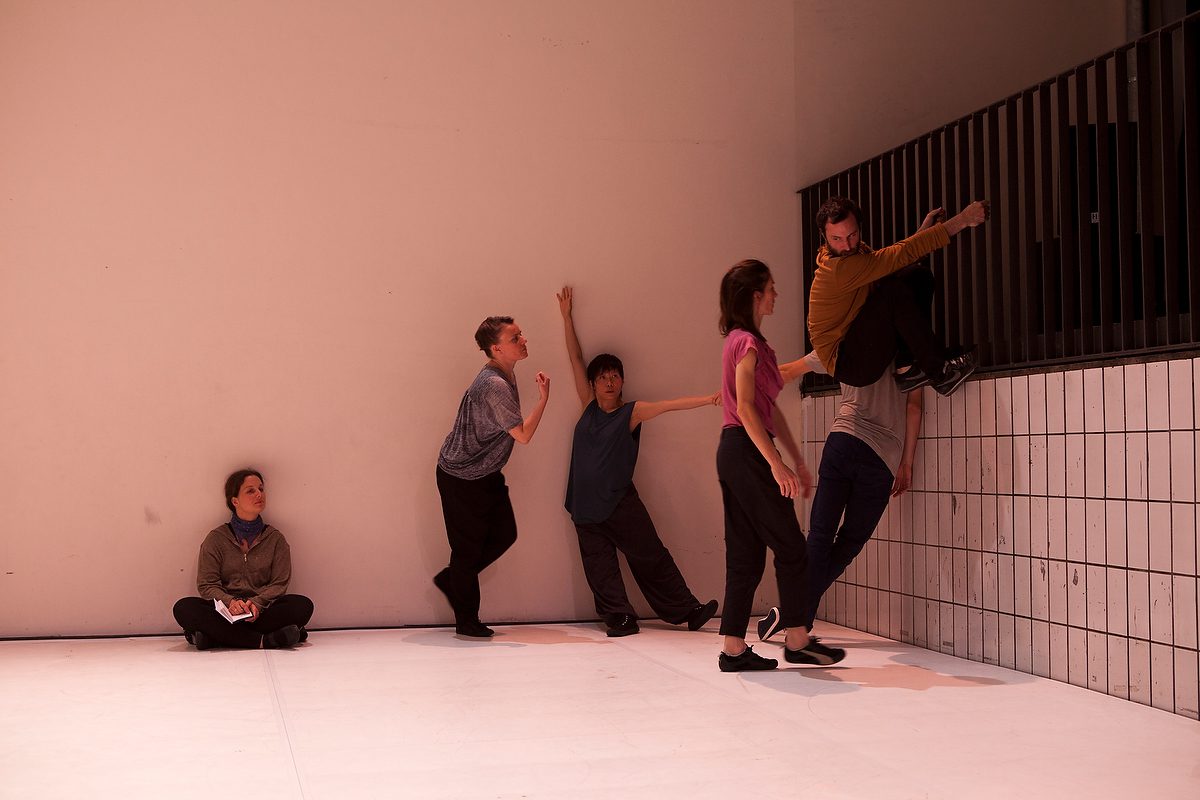
FESTINA LENTE – make haste slowly – unfolds through the engagement of its audience. The rules are simple: together, the audience tries to count to 100. Anyone may call out a single number; if two people call the same number at once, the count starts again at one. There is no referee and no game master. Every number sets something in motion in the choreography, and every new attempt gives birth to a new piece. The chances of reaching 100 in a large group are small – but with each attempt, the possibility is there.
What interests us is the moment of connection this creates. Each spectator contributes, but no one can control the piece alone; the dependency comes less from the dancers than from the other spectators. The counters themselves become part of what is watched, and individual hopes and ambitions turn into a collective action – in the spirit of Joseph Beuys' "every human being is an artist".
We do not want to tell stories or represent styles, but to create situations that are exemplary: models to be experienced rather than decoded. Free from the need to identify and interpret – which is always culturally shaped – dance opens a space for a dynamic, intuitive perception. In a time of global exchange, FESTINA LENTE looks for ways to "understand" even what our own cultural background does not allow us to interpret.
Over many performances, FESTINA LENTE revealed itself as a piece in which several power dynamics are negotiated in real time, on different layers, between the audience and the dancers.
The counting task awakens an ambition in the audience. This leads to many attempts and countless small failures, to a particular tension in the room – and to a growing desire to collaborate. Every voice is different: some people speak more than others, some louder, some more calmly. The intentions and emotions of those who announce a number become audible in their voices. Their interactions form a first layer, which in turn shapes the timing of the choreography.
The audience may choose to chase the dancers through the space to advance in the counting game – but then the choreography loses its detail. If they give the dancers more time, they are rewarded with images that develop and evolve, and that create wonder. Wonder may bring them into the moment, and that in turn may corrupt the counting game: when several people are on the same wavelength at the same moment, they are more likely to call the next number at the same time. A paradox of control.
As the performance goes on, the interactions between dance and counting become more complex and more blurred. A new challenge appears: reading how the counting shapes the choreography and understanding what is going on – up to the point where it is simply too much input.
At the very end, the audience can take over the space while the dancers take over the counting – at least in the latest version, created in Mexico. The power positions are completely reversed, and the audience can experience for themselves what it means to move on numbers. Always being ready for the call is a very high demand on the dancers; at the end of the show, the audience gets the chance to understand it from within.
The movement material is designed to create intimacy, immediacy and mystery. Because they cannot decide when to move, the dancers begin to speak to each other in a secret code language – a way to stay connected as a group and to encourage each other to go on. The audience cannot translate this code, but recognises it as language: the choreography becomes spoken language in a very concrete sense.
Light and sound follow the counting too, and the light changes follow the way the sounds are played. The interactivity runs through every layer of the piece.
This complexity has been very inspiring – for the dancers, for the audiences and for me. From this piece I developed my own theories of interaction, perception and decision-making, some of which I now put to use in the decision field.